Wellness Session: Communicating Your Mental Health Needs
Attend Wellness Session: Communicating Your Mental Health Needs
Thank you! Your request has been received!
Oops! Something went wrong while submitting the form.
In-Sight Collaborative offers monthly wellness sessions to the general public. These sessions are designed to provided a supportive space for those who are on the frontlines of change, come together, process the world and our work, and heal. These groups are designed to create a space where individuals involved in humanitarian efforts can connect, share experiences, and process the emotional toll of their work through creative and hands-on means. It’s a place to share the challenges we’re facing, reflect on our personal journeys, and heal together in a supportive, like-minded community.
How do you communicate your thoughts, feelings, and emotions most intuitively? What kind of communication is most supportive to you when you are in a time of need? Much like different love languages, we also have different ways of communicating when we are in a state of mental or emotional distress. Most of us have not taken time to reflect on how we naturally communicate our needs for support, understanding, and care, which can make times of crisis feel lonely and isolating while leaving our loved ones at a loss for how to help. This wellness session will encourage you to reflect on what ways work best for you to communicate your thoughts and feelings with yourself and with others.
There’s a certain kind of nervousness that comes with sleeping in someone else’s home. Waking up in their spare room, racing to an unfamiliar bus schedule, or eating a breakfast outside of your routine. This vulnerability is hard to capture on camera, but with the Sonder project, it’s found onscreen, in between the giggles, voiceovers, and montages. You’re both witnessing connection, and being connected.
It’s a beautiful experience delivered by five pairs of students from Lincoln-Sudbury Regional High School, with each pair composed of one student from Boston and one from Sudbury. They spent 24 hours living inside each other’s daily routines, taking the same bus, eating the same breakfast, and doing the same after-school activities together. In this student-driven project facilitated by EMA partner Filmbuilding, each pair then produced a short film about their shared experiences. Onscreen, we watch as they navigate the awkwardness, the internal discoveries, and the surprises. The films are funny and warm, but also profound in a way the students did not see coming.
Sudbury to Roslindale
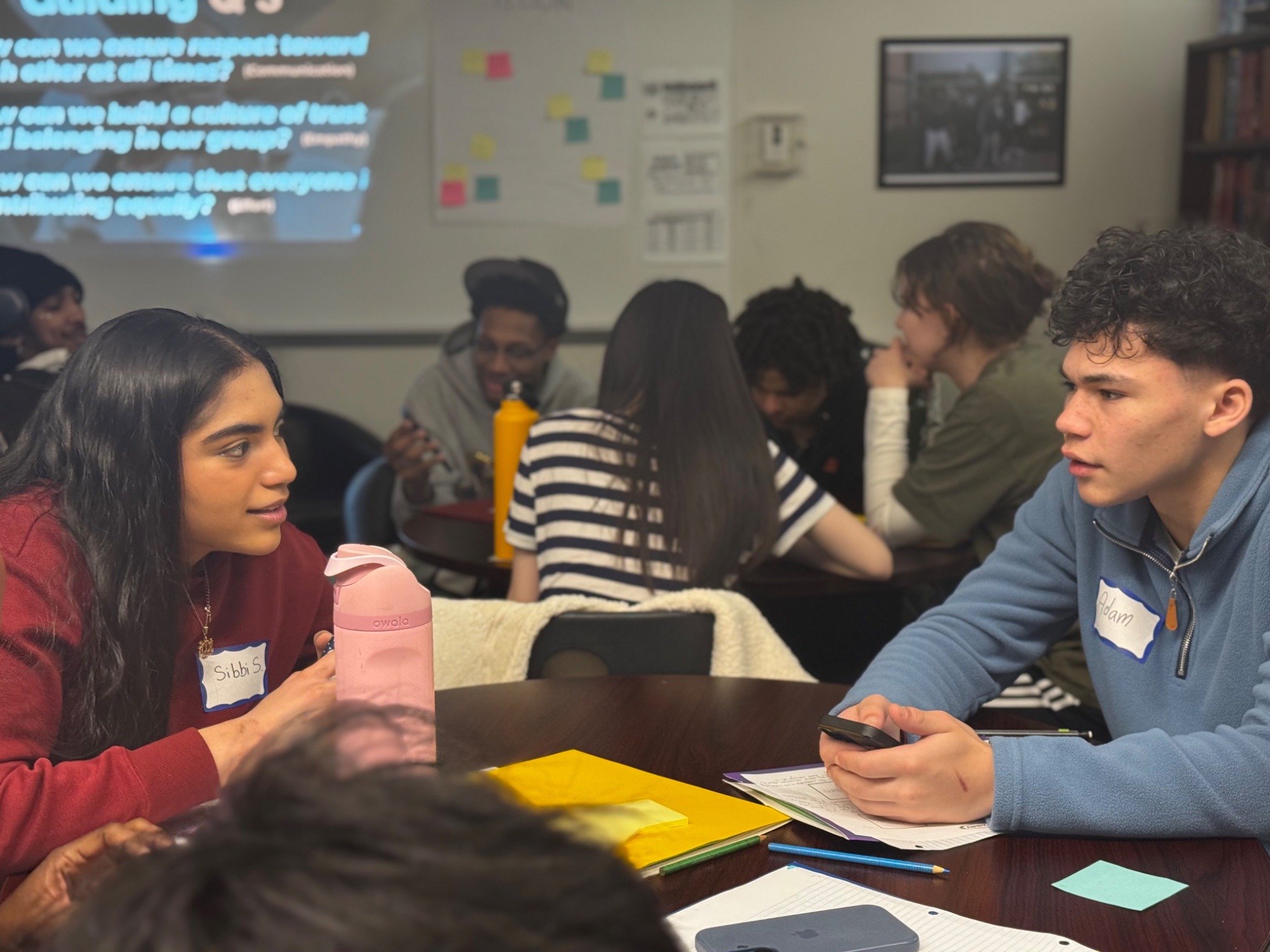
"We were school friends, we knew each other because of ceramics." —Amahle & Sibbi
Amahle, from Roslindale, and Sibbi, from Sudbury, started their film with every teenager’s favorite pastime: shopping at the mall. From the very first clips, the two are seen laughing, in an easy and unforced manner that would make you think they’ve known each other for a lifetime. There’s a trust that you can feel without seeing, and that trust builds candidness, as noted in this reflection from Sibbi:
"People describe the neighborhoods in Boston as ghetto or very dangerous, but I felt very safe. I don’t think it was dangerous or anything"
The two considered themselves to be school friends, only connected by a ceramics class that they barely remember. However, after this experience, they each considered the other to be incredibly understanding and kind. Because of this, their film plays almost like an endearing vlog, watching two young girls slowly become friends.
“I’m really glad I have a friend like you now.” —Xintong & Nori
Xintong had just arrived from China. School staff described her as someone who “didn’t want to talk to people, she just wanted to go home.” Nori remembers being told that and asked to just meet her. What follows is one of the more tender arcs of the project. It starts out with a simple montage: getting ready for school, making breakfast, taking the bus. But cutting through the normalcy, Nori gives insight into her initial feelings:
“It was a big challenge. I was really shy and self-conscious to meet her, and there was a language barrier too.”
Compared to Xintong’s reaction when she was told there was another student who speaks Chinese she could connect with:
"I thought, wow, yay! Someone I can get close with."
By the end of the film, the two are cooking ramen together in matching onesies. The connection is beautiful to watch. Nori sums it up perfectly:
"The goal isn't to compare each other, it's to understand each other. Because no matter where we live or how different things seem, there's always things that connect us — and sometimes taking an adventure into someone else's life can make you understand and appreciate life as a whole better." —Adam & Evan
For Adam and Evan, basketball and food are their connectors. Adam’s family runs a restaurant and throughout the film the boys play basketball together, noting that they used to play together in middle school.
"Basketball connects us in a way. Every time we're together, we play at least once."
The film then takes a deeper look into their schedules. On Evan’s side, the two enjoy Newbury Street, boba, and hot pot (where Adam puts his chopsticks skills to the test). In the morning, Evan and Adam wake up before the sun to make the bus. After a long drive to a long bus ride, Adam reflects:
“If I was at my house at this time, I would be nowhere near close to leaving for the bus."
From basketball to bus rides, we can see the similarities between the boys shine through. They are both excited to learn and engage with each other’s lives. They speak to each other’s parents, eat dinner with their families, and go to sports practices together. Ultimately, they continue learning that there is more that connects them than not.
"Before, I only saw the surface — what we talked about at school or in passing. This helped me see her as a whole different person, not just as my friend from school." —Nyra & Kellie
Nyra and Kellie wasted no time integrating each other into their lives. Montages of family celebrations and hangouts paint a picture of acceptance and a willingness to understand. Nyra recounts watching Kellie care for her younger siblings in a way she didn’t expect, especially since Nyra is the youngest in her home. It’s these moments of clarity that give power to the entire Sonder project. After following Nyra’s routine, Kellie has a similar moment of reflection:
"That's just something that opened my eyes a little bit. You do all of that and still manage to be funny and nice."
“A step backwards is still a part of a dance.” —Dino & Jasier
Dino and Jasier barely knew each other going in.
"When I got the email [connecting us to work on the Sonder project], I thought, I've only ever had two conversations with this person."
Their film moves between genuine curiosity and vulnerable tenderness. Dino, from Sudbury, talks about how much access Boston has. It’s surrounded by everything, but, even deeper, it is completely different than the city she was used to:
"Meeting your family was very interesting because I live in a majority white town. All of my friends growing up, their first language was English. That's not how you live your life, and it was interesting to see a whole new side of the world I had never seen before."
Jasier, meanwhile, found something unexpected in Sudbury's quiet:
"I found it interesting how quiet and dark it was. In Boston, the city lights always seem to seep in. I found it peaceful."
However, the most precious part of the film is watching them teach each other their respective dance styles: ballet for Dino and bachata for Jasier. Jasier takes a ballet class with Dino and is surprised by how hard it is, before the scene cuts to him teaching Dino to dance bachata. Dino's reflection on the experience doubles as a piece of wisdom: "A step backwards is still part of a dance."
Jasier closes the film with something that each film echoed in its own right:
"I hope this project makes it out of Lincoln-Sudbury. I hope this isn't just a one-time thing. I hope the up-and-coming seniors, sophomores, upperclassmen — I hope y'all do something. Bring this back. I want this to be applied to different schools, and see how they handle it, because not all districts have the same METCO students. As a community, you guys are in charge of next year."
None of these students woke up intending to make a statement about inclusion or belonging. They just wanted to experience each other’s lives. And through their points of view, both the students and the audience walk away with an authentic lesson in discomfort, curiosity, and, in every single film, a friendship that looks nothing like where it started. Social and emotional growth doesn't always show up as a data point. Sometimes it shows up as two kids in onesies, making ramen, laughing about an inside joke only they understand.
With projects like Sonder, Filmbuilding is creating pivotal learning experiences and collaborative film programming from the perspectives of students with so many stories to tell. For the benefit of us all, it will be worth watching where it goes next.
Tom Shepard, founder of Youth Documentary Academy (YDA), grew up in Colorado Springs during a time when very few opportunities existed for young people interested in filmmaking. Determined to pursue the craft, he attended film school in the Bay Area before beginning a career with a production company, where he spent more than twenty years. During that time, he experienced firsthand the power of mentorship, first as a young filmmaker and later as someone supporting emerging talent. He came to believe that this same model could have an even greater impact in documentary filmmaking.
After several decades, family needs brought Tom back to Colorado. As he reconnected with the local arts community, conversations kept returning to the same challenge: While aspiring filmmakers on the East and West Coasts had access to top-tier film schools and professional networks, those opportunities simply didn't exist in Colorado. Seeing this gap, Tom co-founded the Youth Documentary Academy (YDA) alongside two fellow filmmakers in 2014 with a simple goal: to give young people access to professional filmmaking equipment, experienced mentors, and, most importantly, the opportunity to tell their own stories.
Since then, YDA has welcomed 12 students each summer into an intensive eight- to-ten-week documentary filmmaking program, helping young filmmakers produce more than 150 films over the last 12 years. Students don't need previous filmmaking experience to apply—only a willingness to tell their own stories. More than half of the participants each year identify as BIPOC, 33% identify as LGBTQ+, and throughout every stage of the process, young people drive the conversation.
When YDA first launched, Tom and his co-founders knew they wanted to work with young people, even though they had very little experience as teachers. During the program's first year, one high school student created a documentary about his relationship with his father and how it changed after his father returned from deployment in the Iraq War. While he had not yet fully processed those experiences, creating the documentary gave him a way to make sense of them, transforming memories once rooted in shame into a source of empowerment. Both of his parents agreed to participate in the film, and the process became a space where the family could have courageous conversations and express emotions they had never been able to share before.
That experience fundamentally shaped YDA's approach. Tom and his colleagues quickly began bringing in social workers and therapists to support students as they navigated deeply personal stories. One social worker described what YDA was doing as a form of "Narrative Therapy"—helping young people move traumatic experiences from the limbic system to the storytelling brain, allowing them to reclaim those experiences and tell their stories on their own terms. Rather than being defined by painful moments, students could become authors—and even ambassadors—of their own experiences.
As the program matured, others began taking notice. Six to seven years after its founding, YDA students were regularly submitting their films to festivals, and the organization was invited to produce a curated television series for Rocky Mountain PBS. Soon afterward, American Public Television (APT) partnered with YDA to distribute the series nationally across the PBS system. The series, Our Time, reached the top 25% of the PBS market. Each 27-minute episode pairs two student documentary films exploring a shared theme, followed by interviews with the young filmmakers.
Like so many organizations, YDA pivoted when the COVID-19 pandemic brought in-person programming to a halt. At the same time, another crisis was unfolding: a sharp decline in young people's mental, social, and emotional well-being. Recognizing the role storytelling could play in supporting youth, Cass Walton, Executive Director of the Suicide Prevention Partnership (SPP), approached Tom about creating a partnership that connected teens with mental health resources through filmmaking.
That collaboration led to a traveling workshop for high schools and, ultimately, the creation of Youth Media Matters, a youth-led film festival centered on mental health. Students created films exploring topics that mattered to them and participated in post-screening Q&A panels. Community mental health organizations, medical providers, and hospitals joined the event to offer resources on topics ranging from domestic violence to eating disorders. When Youth Media Matters launched in 2021, the response was overwhelmingly positive. Pre- and post-event surveys showed that many students related deeply to the stories they saw on screen and left feeling more encouraged to seek mental health support. After years of focusing primarily on filmmaking, YDA had discovered that storytelling could also serve as a powerful gateway to healing, community, and mental health advocacy.
Today, YDA is in its thirteenth year of programming, and the organization's focus has shifted from simply building a successful local program to asking how its model can grow without losing what makes it special. Through its partnership with EMA and the Community of Learners, YDA is exploring what it would look like to deepen relationships with teachers and mentors while expanding programs like Youth Media Matters into additional schools.
Following the first festival, many teachers described the experience as providing both "windows and mirrors." The films offered students windows into the lives of peers whose experiences differed from their own, while also serving as mirrors that reflected their own stories back to them, reminding them they were not alone. At a time when many educators are searching for meaningful ways to respond to the growing youth mental health crisis, Youth Media Matters has become more than a film festival—it is a space where young people can tell their stories, connect with one another, and access support. Through its partnership with EMA and its Purpose Storytelling Collaborative, YDA hopes to bring that experience to even more communities.
Some of the most life-changing and impactful learning moments happen outside of the classroom, in kitchens, over a hot breakfast made by someone else’s mother at 5:30 in the morning.
That’s where the Sonder project begins.
Lincoln-Sudbury Regional High School (LSRHS) senior PJ Purvis spent a night at his friend Moses Sibley’s home in Mattapan, a neighborhood of Boston, MA. They woke before sunrise, Moses’s mother cooked them breakfast, and they headed out for the bus. When Moses stayed at PJ’s house in Sudbury, they slept until 7:30 and settled for protein bars. Two different communities, households, and realities of life, connected by friendship, and, ultimately, understanding.
A normal teenage experience became the foundation for Sonder — the student-initiated documentary film project pairing Boston and Lincoln-Sudbury students for 24-hour home exchanges. Named after the quiet realization that every person around us is living a life as rich and real as your own, Sonder asks young people to fully step into someone else's world, and then tell that story together.
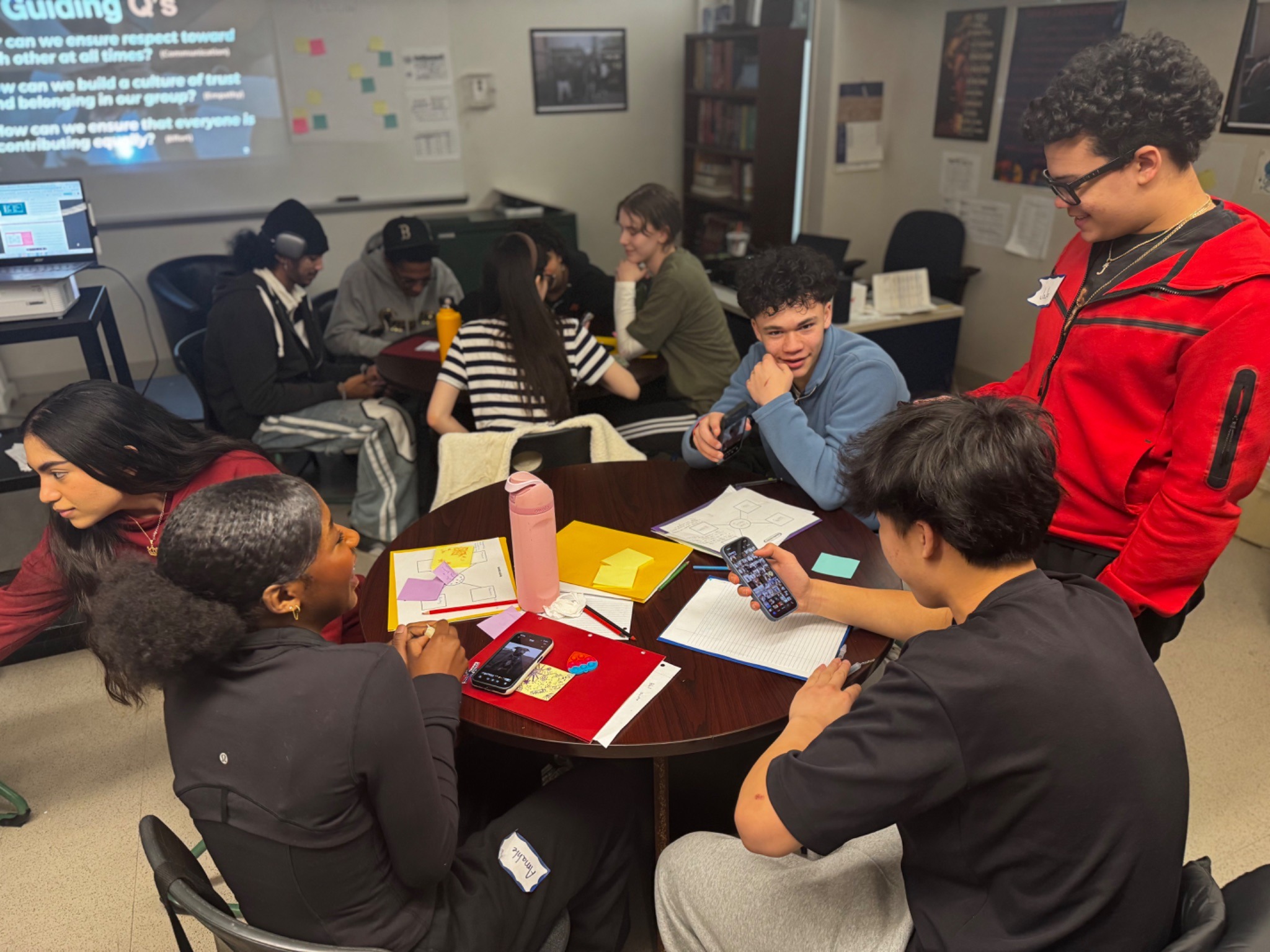
Six pairs of students spent time in each other’s homes, interviewed a family member or role model who has shaped their partner’s life, and created short documentary films that captured what they discovered. Throughout the experience, each student journaled about their evolution from stranger to acquaintance to friend.
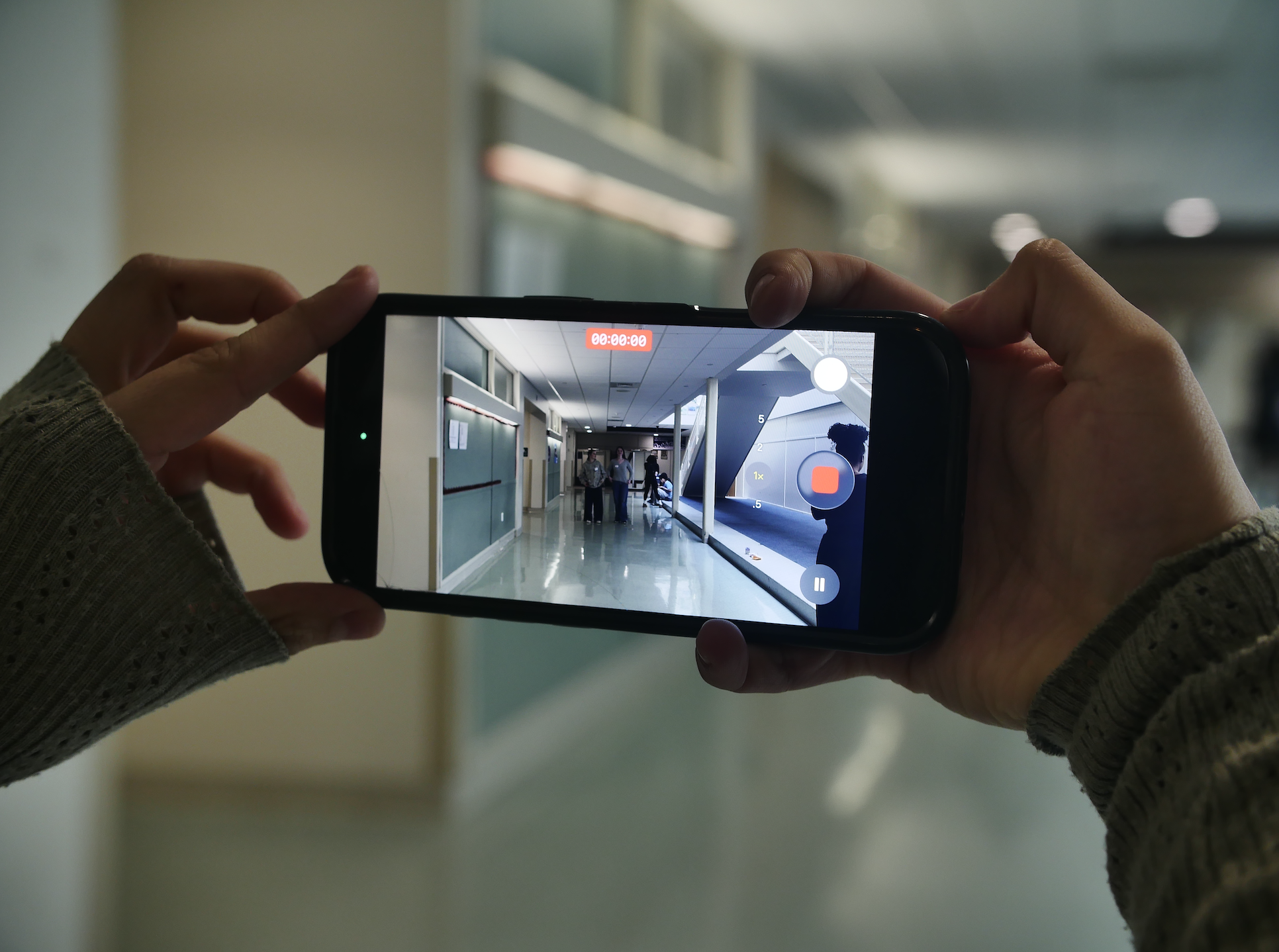
Before the cameras began to roll, students went through a hands-on training with Tom Flint of Filmbuilding, who guided them through the technical and creative foundations of documentary filmmaking, from the shooting to the editing and the nuances of visual storytelling. With that training, students had the tools to advance past simple documentation—they had the language to both shape and share their experiences. Throughout the project, Tom checked in with each pair as they moved from raw footage to a finished film. Together, they translated the deeply personal moments into a cohesive story. The entire process wove together everything the students were observing, feeling, and learning.
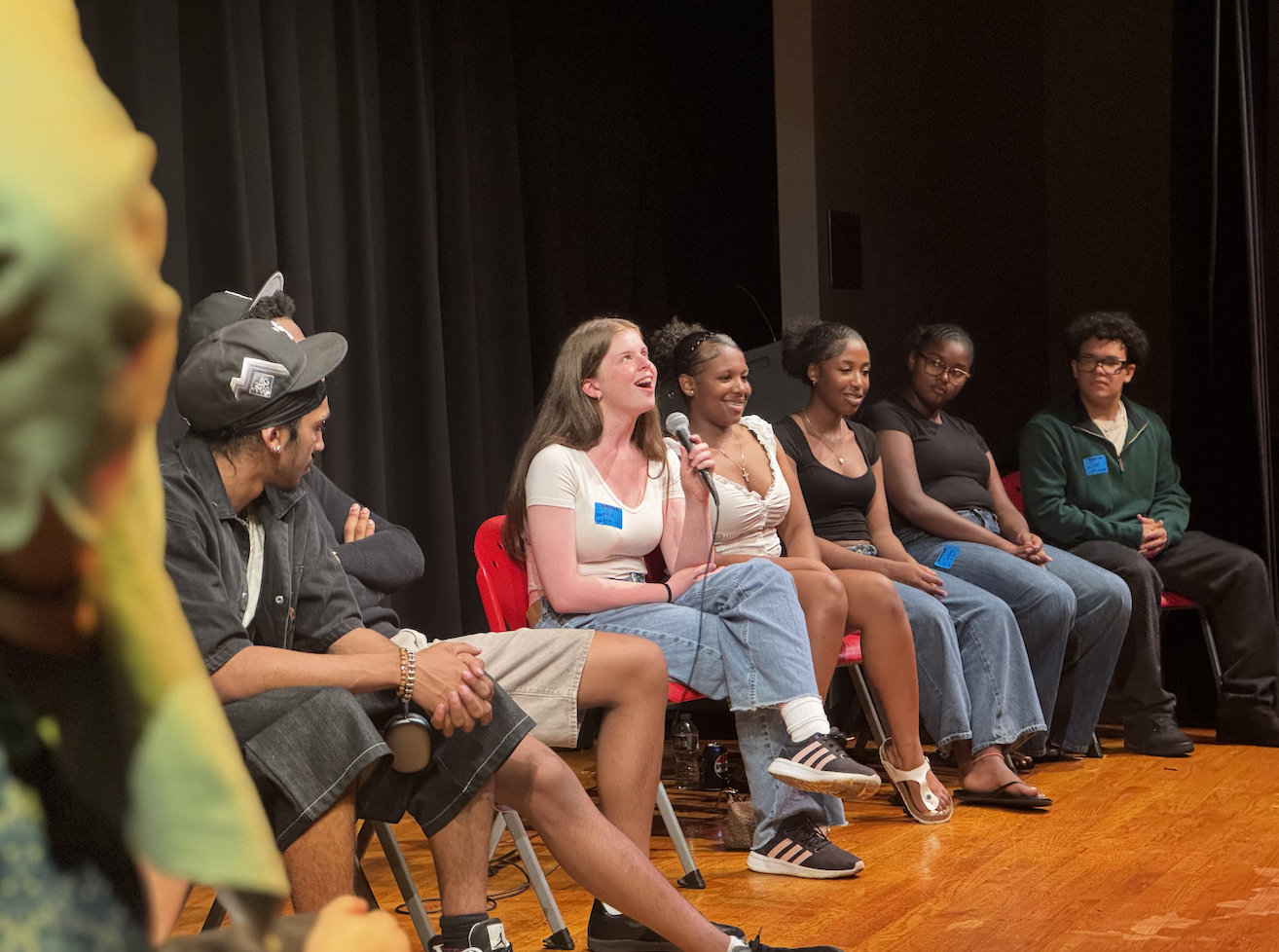
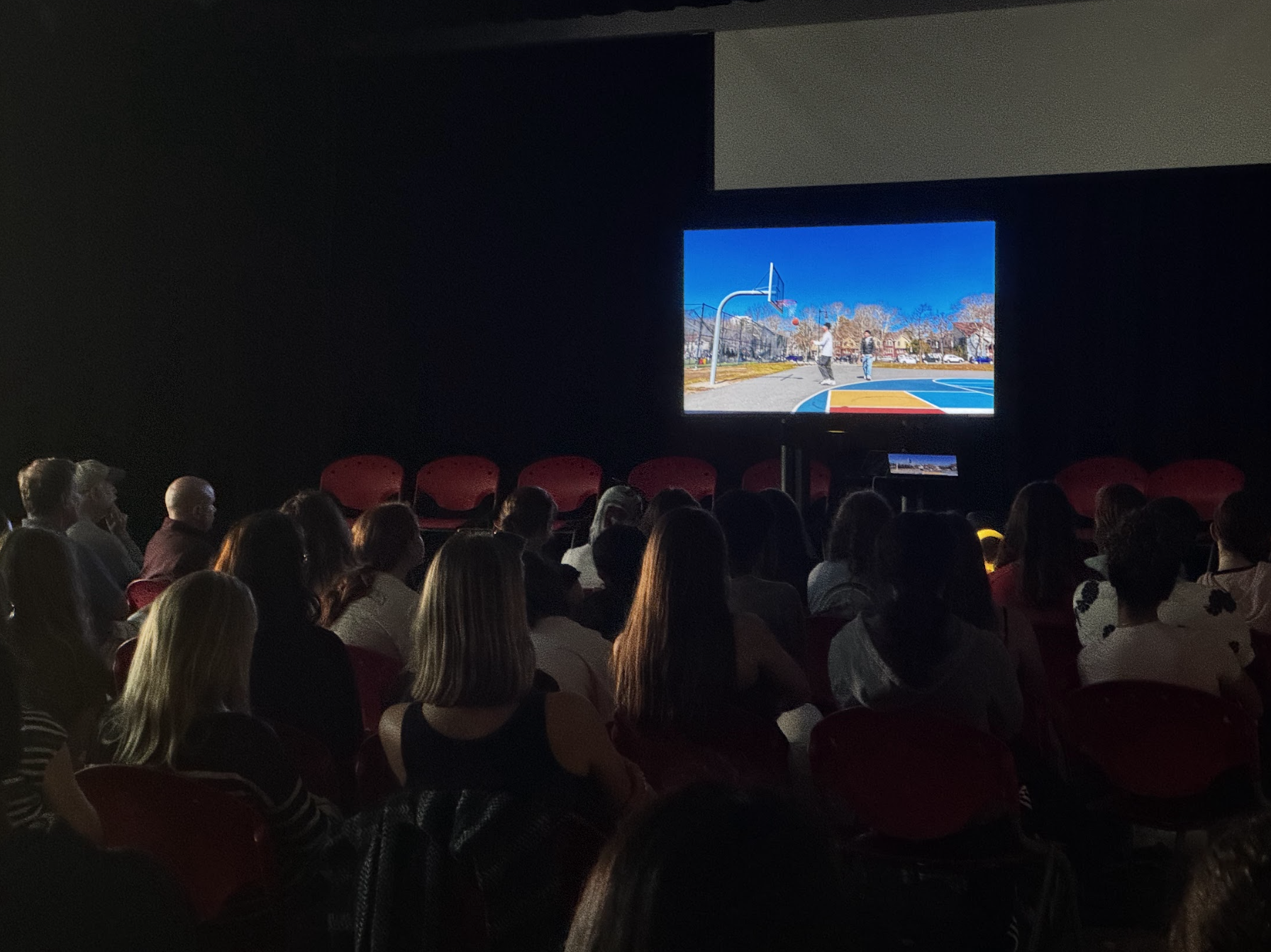
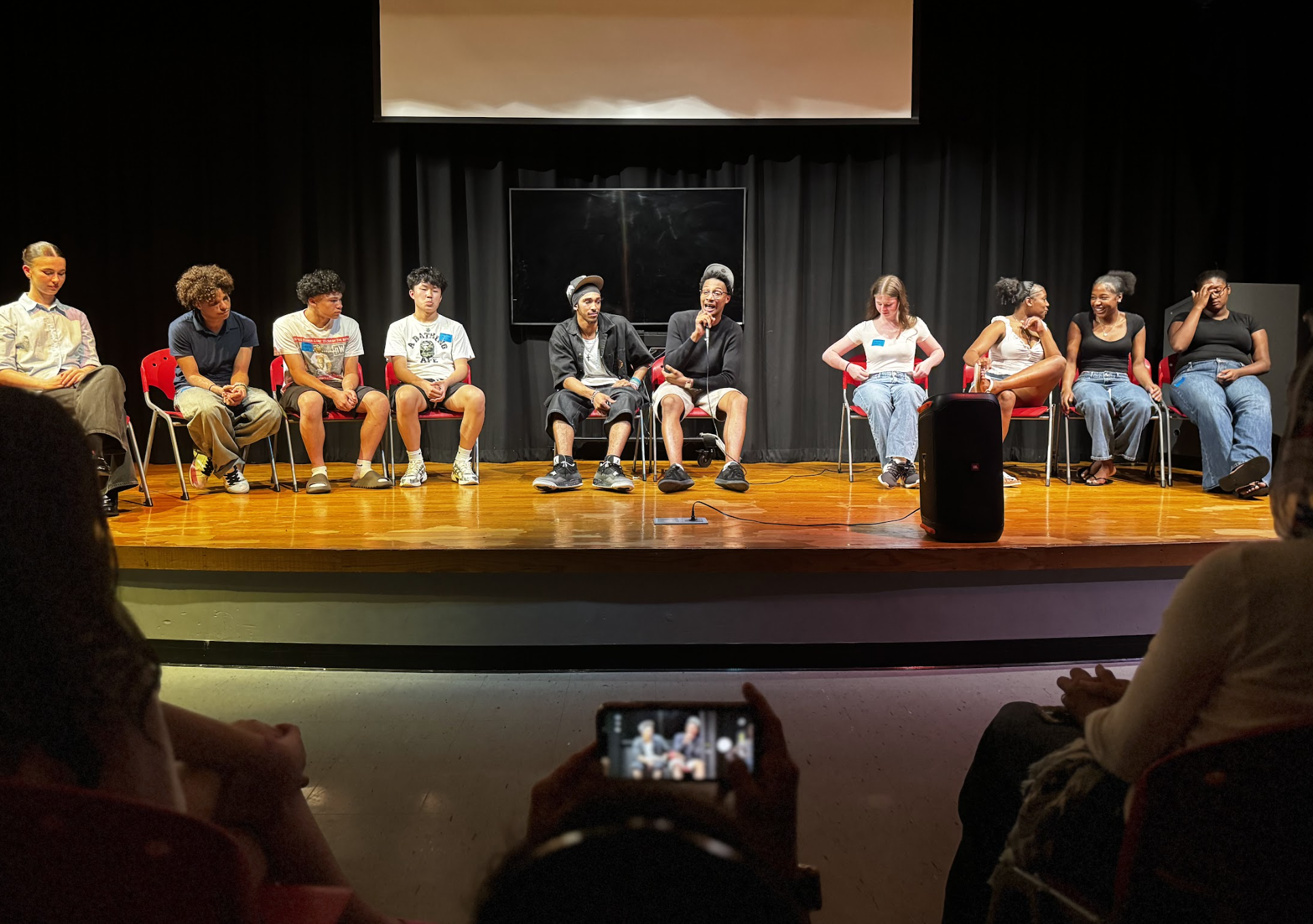
On May 18th, EMA and LSRHS invited members of their community to a film premiere and roundtable conversation at the Berkshire Partners Blue Hill Boys & Girls Club in Dorchester, MA. As each film was screened, audiences were immersed in the lives and experiences of each student pair. Kyla Goss, EMA’s Director of Outreach and Engagement, was in attendance and noted how deeply transformative she believed this experience would prove to be for these students as they continue on their life journeys.
“It’s incredible to see these students create experiences for themselves that will shape them for the rest of their lives,” Kyla observed. “To intentionally opt for an experience that puts them in unfamiliar spaces is awe-inspiring — after doing this, there are really no limitations to what they can do.”